
Residential solar service is a different business from commercial service, and the screening looks different because the economics do. The buyer here is still a company — an O&M or repair contractor with trucks to fill. The properties are houses.
A commercial screen chases one 40,000-square-foot roof at a time. A residential screen chases a street. Everything that follows comes from that difference.
The unit of work is the route, not the roof
A residential job is small and the drive to it is not. Once a tech is on a street, the marginal cost of the next house on that street is a fraction of the cost of the first. That inverts the usual ranking instinct.
A single excellent candidate forty minutes out is usually worth less than a cluster of ordinary ones in a subdivision you can work through in an afternoon. Rank the cluster, then rank inside it.
- Count candidates per subdivision or per postal route before you score any individual address.
- Set a floor for how many stops make a trip worth dispatching, and use it to drop isolated addresses.
- Prefer clusters where the install vintage is consistent, because the crew can carry the right parts once instead of guessing per stop.
- Note gated communities, HOA-controlled roofs, and shared-roof condominiums separately. Access constraints change the job before the technical work starts.
Permits cluster by subdivision and by installer
This is one of the strongest residential signals in public records. Pull photovoltaic and electrical permits from the county or municipal index across your service area, then sort them by contractor name and by date rather than by address.
What emerges is a map of campaigns. A residential installer works a neighborhood, sells a street, and files a run of permits within months of each other. That gives you install vintage at street level even where any single record is thin — and it tells you which equipment generation is likely on those roofs.
It also tells you something about the service relationship. A run of permits from a contractor who has since left the market is a different situation from a run filed by a company still operating locally with a live service department.
Reading residential arrays from above is genuinely harder
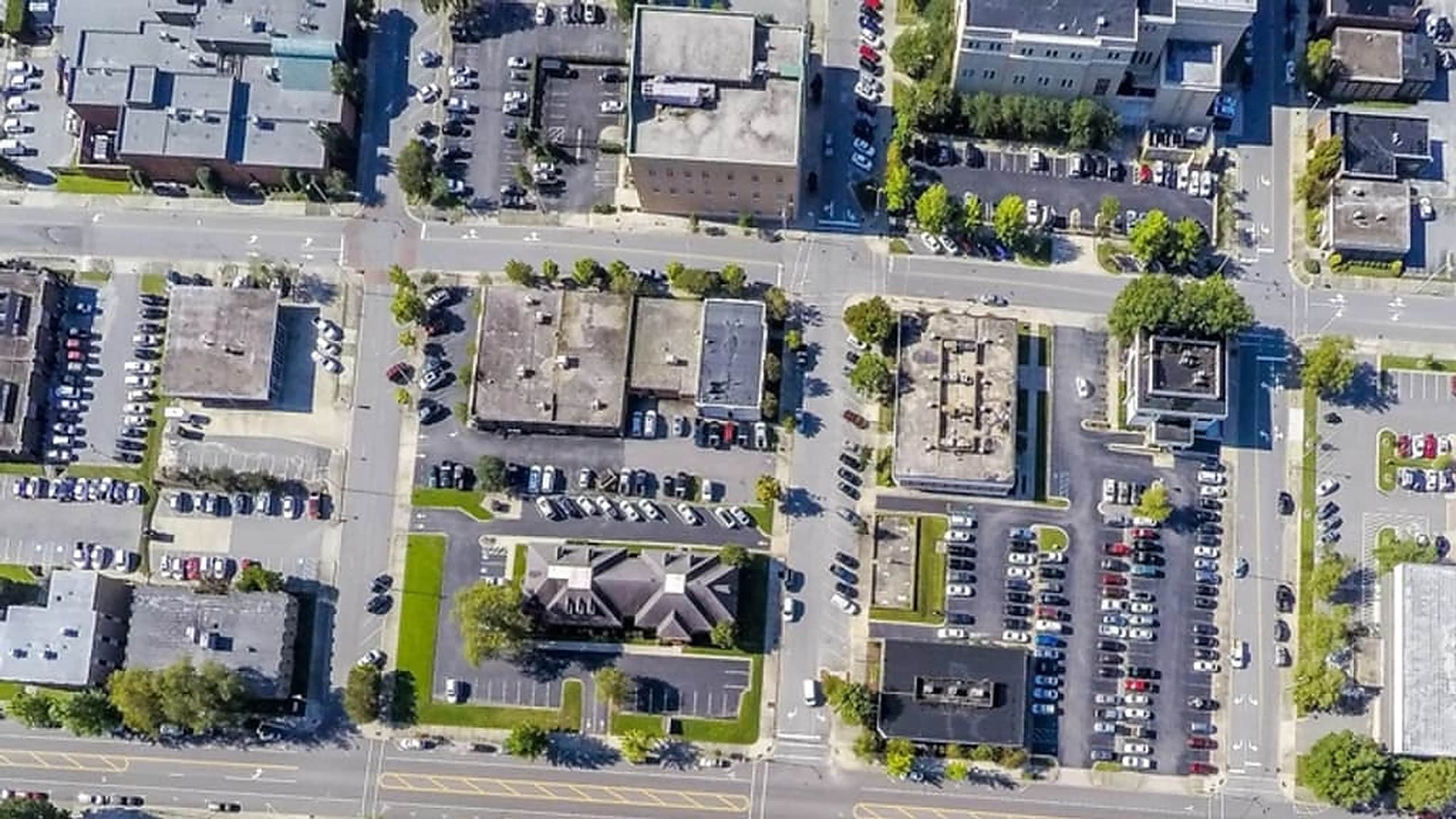
On a flat commercial roof, a racked array reads clearly from public orthoimagery. On houses it does not, and a drive-by will show the misses.
- Pitched planes are foreshortened in an orthophoto, so a small array on a steep plane occupies very few pixels.
- Dark modules on dark asphalt shingle have low contrast, especially on an older weathered roof.
- Dormers, hips, valleys, and roof-mounted vents break a plane into segments that read like array edges, and vice versa.
- Mature tree canopy over residential streets hides roof planes entirely, and NAIP is flown leaf-on.
- North-facing planes and anything in the shadow of the ridge lose detail at the capture angle.
The practical consequence is a real miss rate in both directions: arrays present and not detected, and roof features called as arrays that are not. Treat an imagery-derived array flag as a candidate to confirm, and confirm it against the permit record before it drives a dispatch. Where the two sources agree, confidence is reasonable. Where they disagree, say so on the row instead of picking the more convenient one.
The assessor fields that matter more on houses
Commercial screening leans on footprint and land-use code. Residential screening leans on two fields that barely register commercially.
Year built is the first. On a house it is a usable proxy for the original roof assembly and, combined with typical shingle service life in your climate, for whether a re-roof is likely to be due. An array on a roof approaching replacement is a removal-and-reinstall conversation, which is service work of a specific and schedulable kind.
Owner-occupancy is the second. When the assessor mailing address matches the situs address, you are likely dealing with the resident. When it does not, the property may be a rental, and the person who notices a fault is not the person who authorizes the repair. Last sale date matters for the same reason: a house sold after its array was permitted often means the current owner never held the original paperwork, the monitoring login, or the installer relationship.
Turn the list into a week of routed work
The output of a residential screen should not look like a commercial prospect list. It should look like a schedule: clusters ordered by density, each cluster carrying the vintage and installer pattern behind it, each address carrying its own evidence and its own open checks.
- Cluster identifier, stop count, and estimated drive time from the nearest base.
- Install vintage for the cluster, with the permit records and dates that support it.
- Per-address array confirmation status: seen in imagery, found in permits, both, or one and not the other.
- Year built and owner-occupancy indication from the assessor record, with the record date.
- The specific next check, which for most rows is a homeowner conversation rather than a site visit.
That is as far as public data honestly goes. It can tell you which streets have arrays, roughly when they went up, who put them there, and which houses are worth a knock on the same trip. It cannot tell you that any one of those systems needs repair. The screen buys you a dense day; the diagnosis still belongs to the technician standing on the roof.