A lot of commercial HVAC replacement work arrives as an emergency. A unit fails in July, the facilities manager calls whoever answers, and the job goes to whichever contractor has a truck nearby.
Building a pipeline instead of waiting for that call means knowing which buildings are due before anything fails. Much of that is visible from above and in the public record, up to a point.
1. Count the units
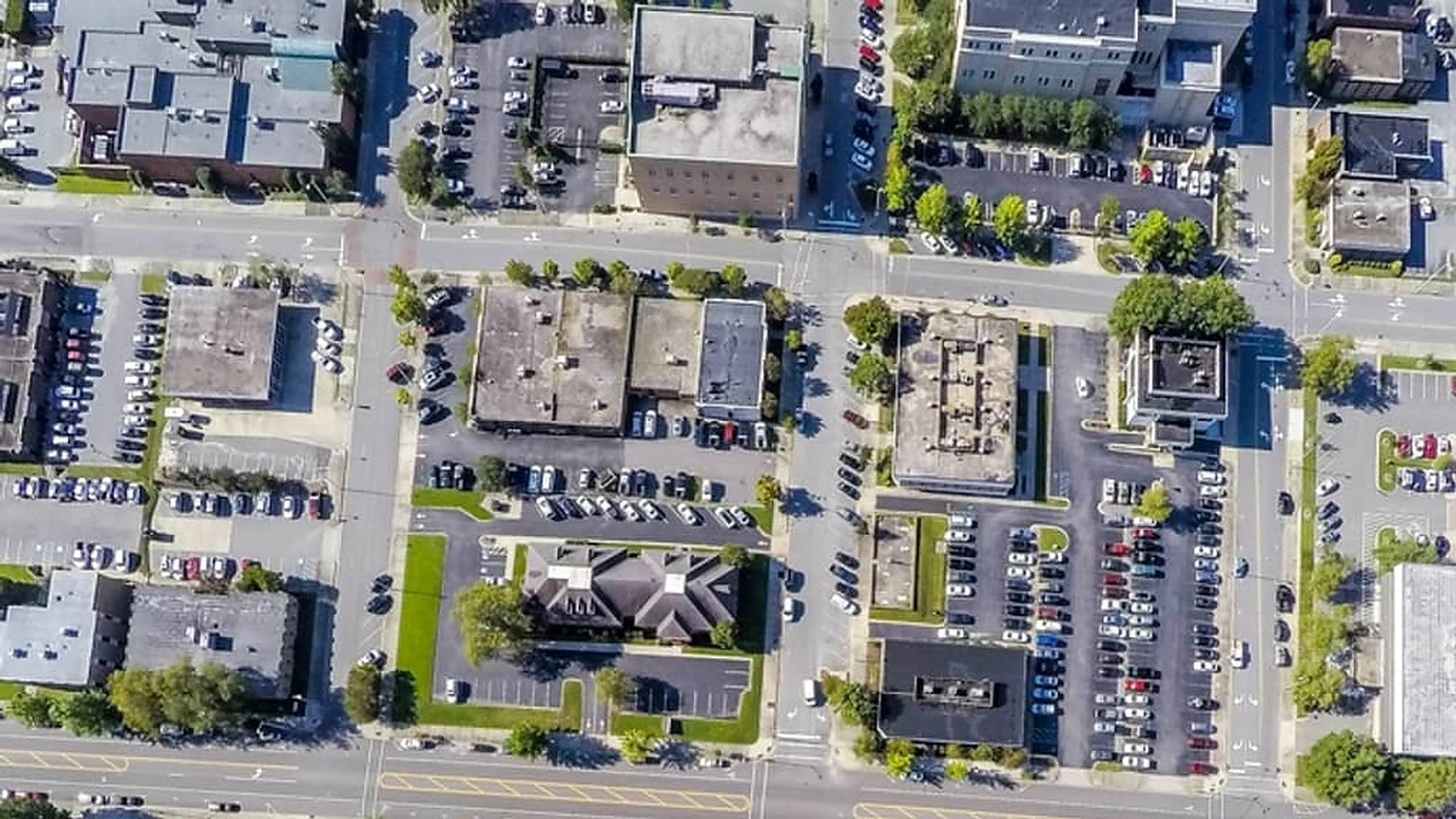
Packaged rooftop units, condensers, and larger mechanical equipment show clearly in current high-resolution imagery of a low-rise roof. A count sizes the building's equipment in rough terms, and tells you whether one contract means one unit or thirty.
Imagery also shows arrangement: a tidy row installed at the same time, or a mixed field of units added over the years, which usually means mixed ages.
2. Pull the mechanical permit trail
Many jurisdictions index mechanical permits, sometimes with a description and a valuation. A building whose last mechanical permit is old, among neighbors that have all replaced equipment recently, is worth a closer look.
As with roofing, read the gaps carefully. Like-for-like swaps do not always get a permit, and some counties do not index mechanical permits at all, so a missing record is a question rather than an answer.
3. Use building age and use as the baseline
The assessor's year built, use code, and gross building area set the baseline: an older retail strip, a mid-size office, and a cold-storage warehouse have very different mechanical loads and replacement patterns.
Year built is a ceiling on equipment age, not an estimate of it. A building from 1985 may be on its third set of units.
4. Watch the roof
That makes the roof's permit trail, and its condition from above, part of an HVAC ranking. How to find commercial roofing prospects covers how to read both.
5. Weigh exposure and load
Buildings that run hard wear equipment faster. The number of extreme-heat days, the building's use and hours, and a dark roof that absorbs heat all add load to rooftop equipment.
None of these dates a unit. They change how much weight an old permit record should carry.
6. Work out who decides
Owner-occupied buildings, multi-tenant properties, and national-brand retail each route an HVAC decision differently, and a net lease can put the equipment on the tenant. The assessor record and the businesses on site suggest which kind of building it is.
Whether a service agreement is already in place is not in any record. That is the first question of the first call.
Rank, then plan the season
Rank the buildings on the six signals together, with the weighting written down in advance. Replacement work is seasonal, and a ranked list lets you fill the shoulder months with planned work instead of waiting for July.
Our commercial roofing and HVAC reports rank on unit count, roof and mechanical permits, building age and use, storm exposure, and the ownership path.
What imagery and records cannot tell you
- Unit age, tonnage, efficiency, and refrigerant. Those are on the nameplate.
- Condition, maintenance history, and whether a unit is running at all.
- Whether a service agreement already exists, and with whom.
- Budget timing, or the owner's appetite for replacement over repair.
The screen finds the buildings worth a visit. The nameplate, the owner, and the service history do the rest.