
If a free sample has burned you before, it was probably a spreadsheet of addresses, a sales call booked before anyone looked at your market, and a follow-up sequence that never ends. The form on our contact page works differently.
I lead client success here, and preview requests come through my team. This is what actually happens after you press send, in the order it happens, and what to put in the form to get a useful preview on the first pass.
1. You send five fields
The form asks for your name, a work email, your company, the territory or portfolio, and the decision the preview should support. There is one optional box at the end, and it is the one that most changes the result.
- The property types that count and the ones that do not: flat-roof industrial only, or houses as well.
- A size floor or ceiling, if you have one: a minimum roof area, a building-size band, a maximum drive time from the yard.
- Anything that disqualifies a property for you, such as an owner type you do not sell to or a roof system you do not work on.
- Where the ranking goes next: a rep's week, an estimator's route, a diligence budget.
None of it is required. A request with only the five fields still gets a preview; it just leans more on our defaults.
2. A person replies within 1 business day
Every request is read by a person, and you hear back within 1 business day. Most replies are short: they restate the boundary in plain words and ask the one question the request left open.
The usual open question is scale. “Charlotte” can mean the city limits, the county, or a multi-county metro, and the ranking changes with each. If your request is unambiguous, the reply simply confirms it.
3. We write the criteria down before we rank anything
Before a single property is ranked, the criteria are written out: what qualifies, what disqualifies, and what order the survivors should come in. This is the step a free sample can skip, and it is the reason ours can be checked.
Written criteria let you judge the preview against what you asked for rather than against how impressive the addresses look. It is also the document a paid pilot is later held to.
4. The screen runs, and an analyst reviews it
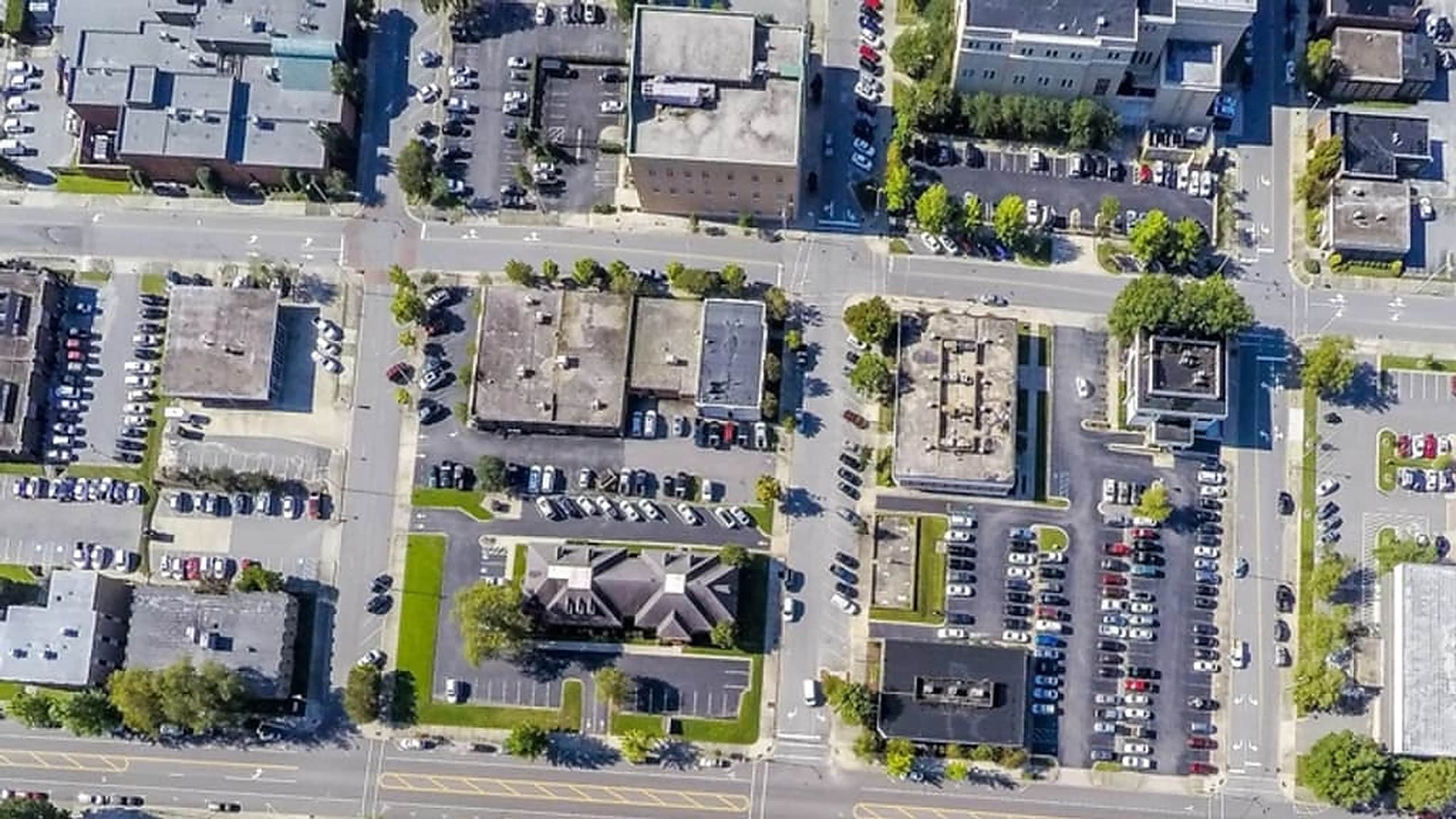
The territory is screened against aerial imagery, parcel and assessor records, and public permit data, as the methodology page sets out. The properties that survive the criteria are ranked, and an analyst reviews the ranking before anything is sent.
The review is not a formality. It is where a roof that read as clear turns out to be shaded by a tree that leafed out after the imagery was flown, and where a permit record contradicts what the photograph shows.
5. Your 3 properties arrive within 3 business days
The clock starts when the territory is confirmed, not when the form arrives, and the preview lands within 3 business days of that. It has the same structure as the sample report.
- The rank, and the plain-language reason for it.
- The evidence: what the imagery shows, what the parcel record says, what the permit index contains, and what it does not.
- One stated limitation — the thing the evidence cannot settle for that property.
- The open checks: the records to pull and the questions to ask before anyone rolls a truck or makes a call.
What the preview is not
It is not a lead list, and it does not tell you an owner wants to talk. No public record establishes owner interest, and a preview that implied one would be the first untrue thing on the page.
It is also not a sales step you have to get through. There is no card, no obligation, and no call required, and the 3 properties are yours to keep whether or not you ever speak to us again.
What happens next, if anything
Read the preview, check a property or two against what you already know, and decide from there. If the ranking held up, the next step is the Proof-of-Value Pilot.
The pilot is 25 properties reviewed in detail for $500, delivered 10 business days after the written scope is signed off. It carries the Match Standard: if fewer than 20 of the 25 meet the criteria you signed off on, the fee is refunded in full.
If the ranking did not hold up, tell us which property and why. That is one of the most useful things a preview can produce, and it costs you nothing to send.